|
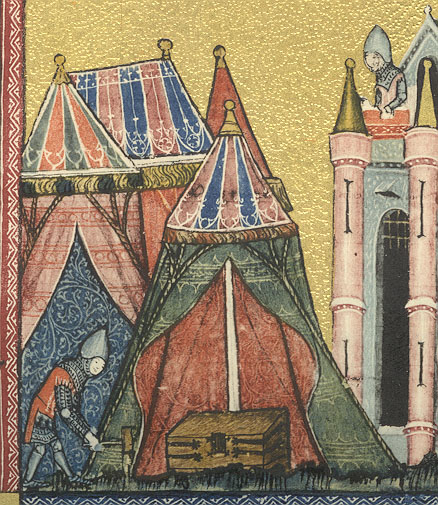
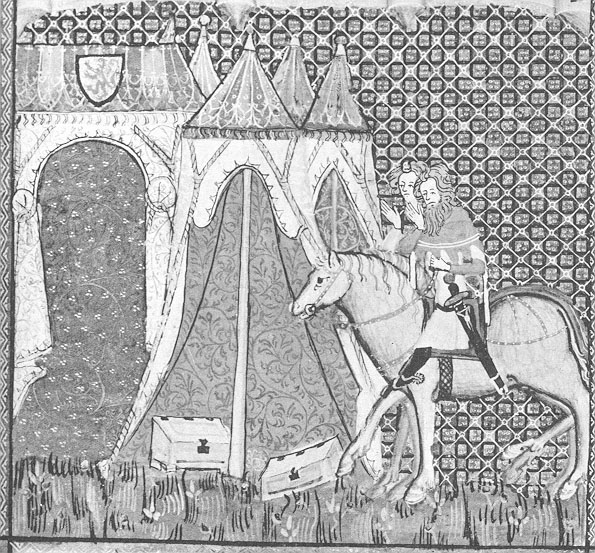
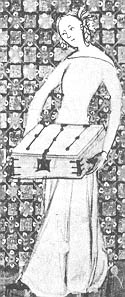
To improve navigation, the links on this page have been divided between extant examples (in museums, churches, etc.) and those that appear in illustrations & artwork. The illustrations provide examples of contexts for the chests and trunks; what sort of person would have used them, where they were used (in the home, while traveling), and what they might have contained. For construction information, see the woodworking links, or the boxes, caskets, chests & coffers section.
EXTANT CHESTS (The cassoni have moved to their own page.)
- The Voxtorp Church Chest, Sweden, c. 1200
- A chest made from a solid piece of wood, Passau, 13th century
- 13th century chest from Alsace
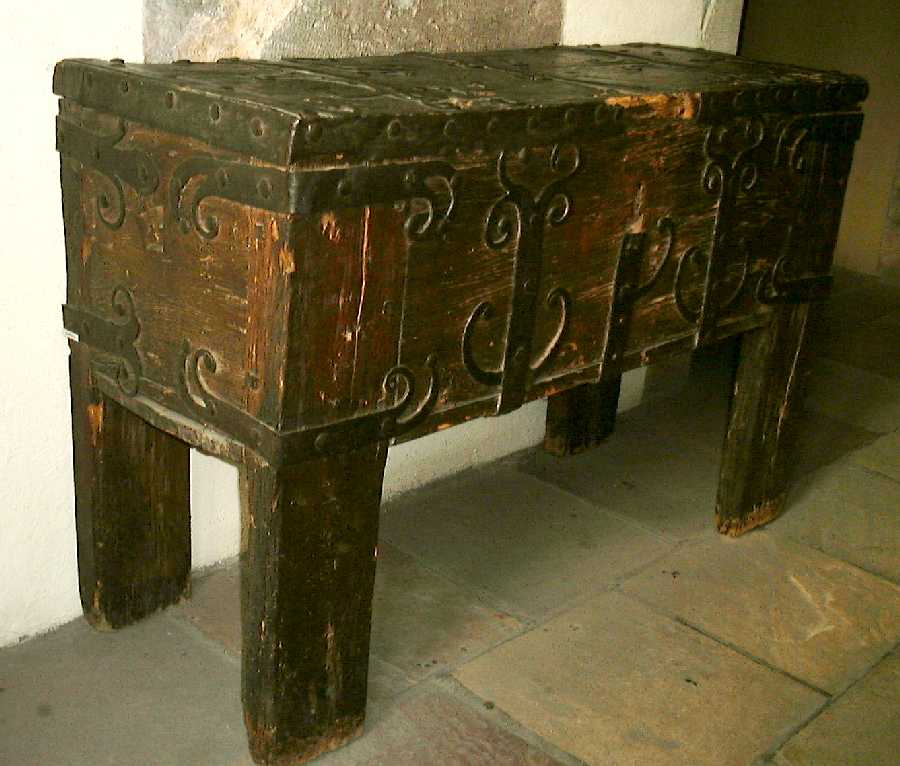
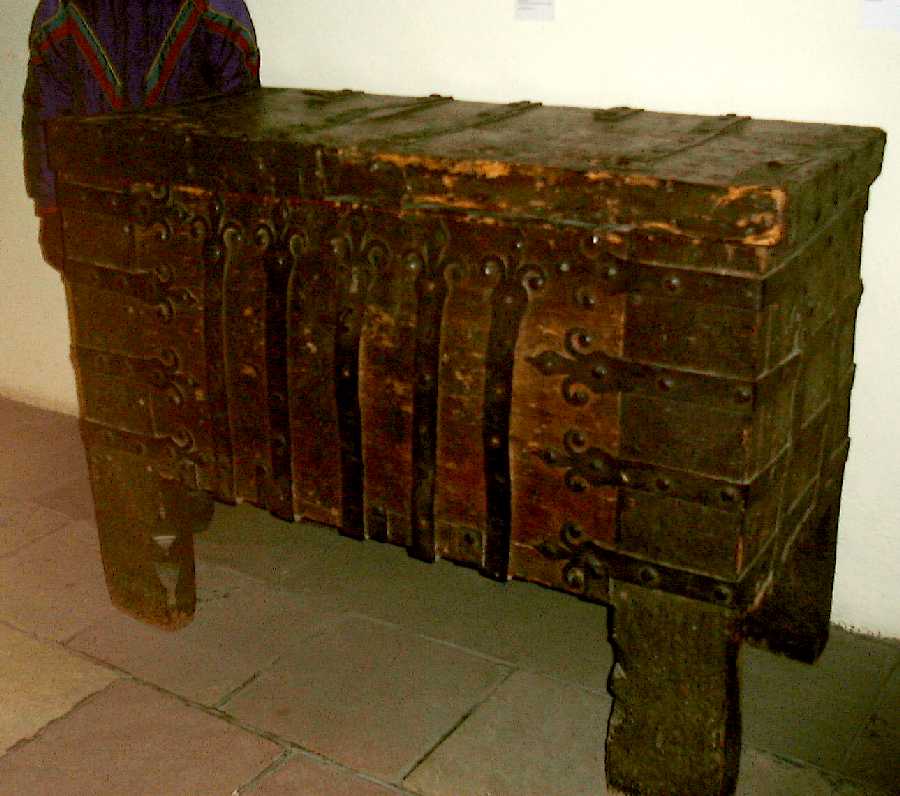
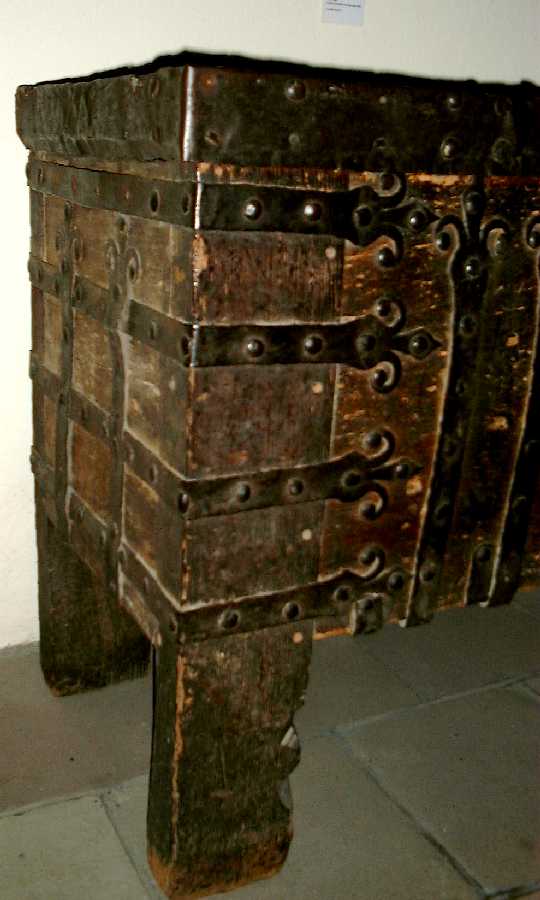
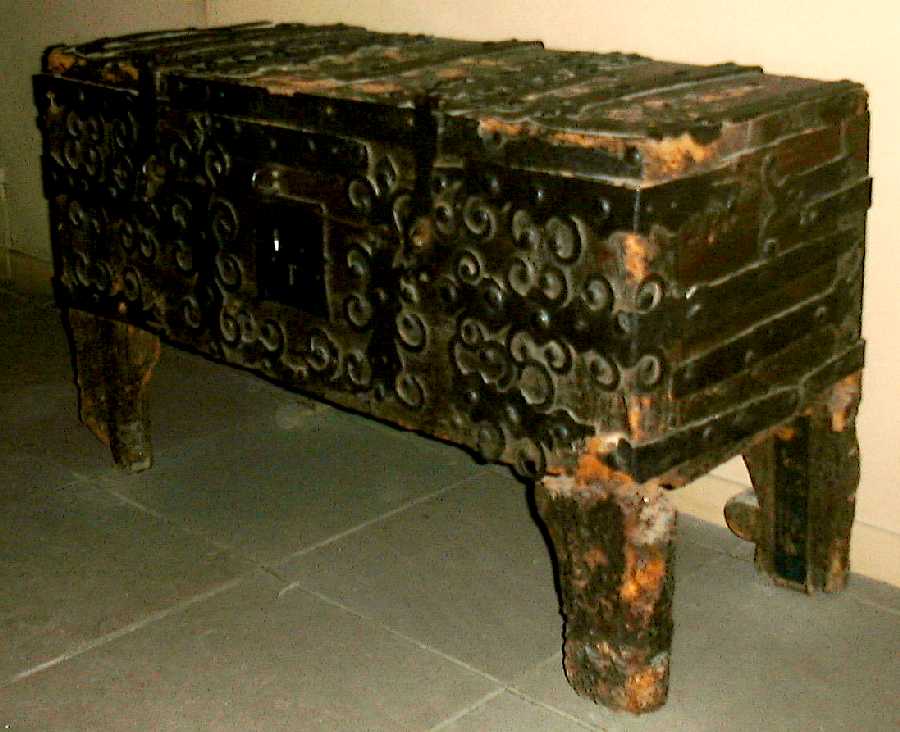
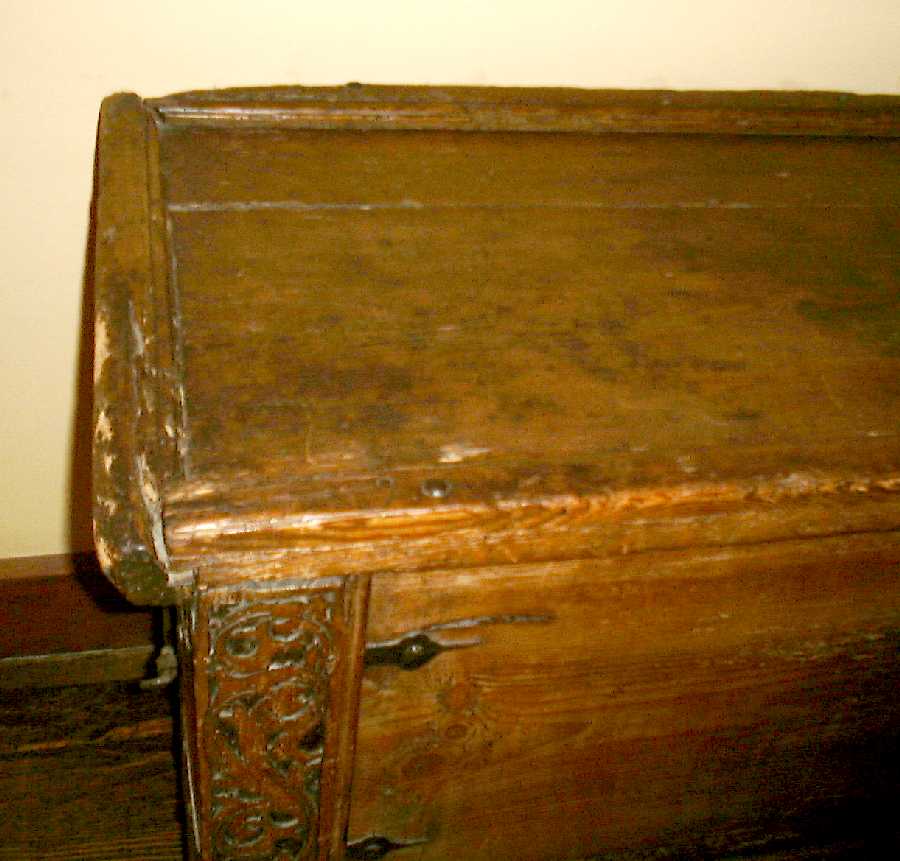
- 13th century French chest (above)
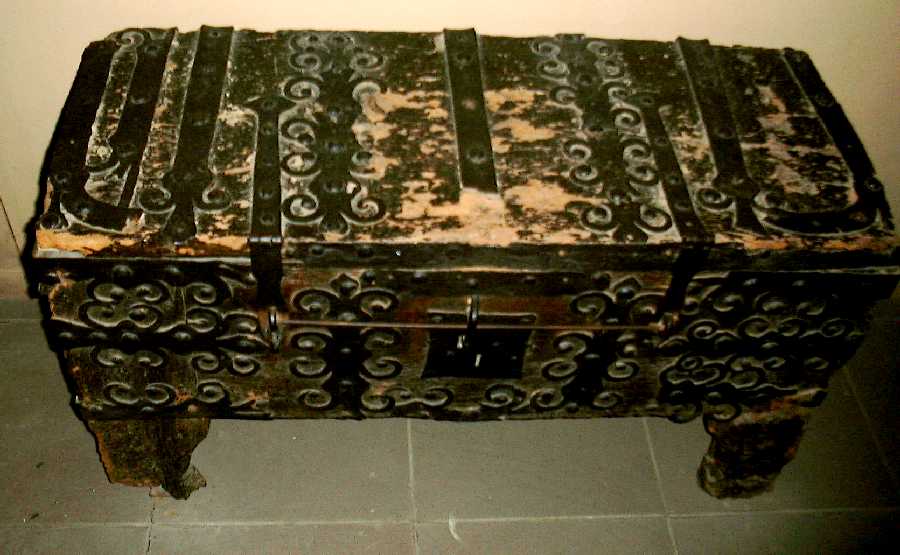
- 13th century chest with chip-carved designs
- V&A W.30-1926, a 13th century chest with chip-carved designs, England
- 13th century chest in Laneham Church
- A chest from Kezmarok, 14th century
- 14th century chest (also here) from the Church of St. Thomas in Strasbourg
- 14th century chest (also here) from Riquewihr
- 14th century chest (also here, here, here, and here) from Alsace
- A chest from Cerveny Klastor, c. 1395-1405
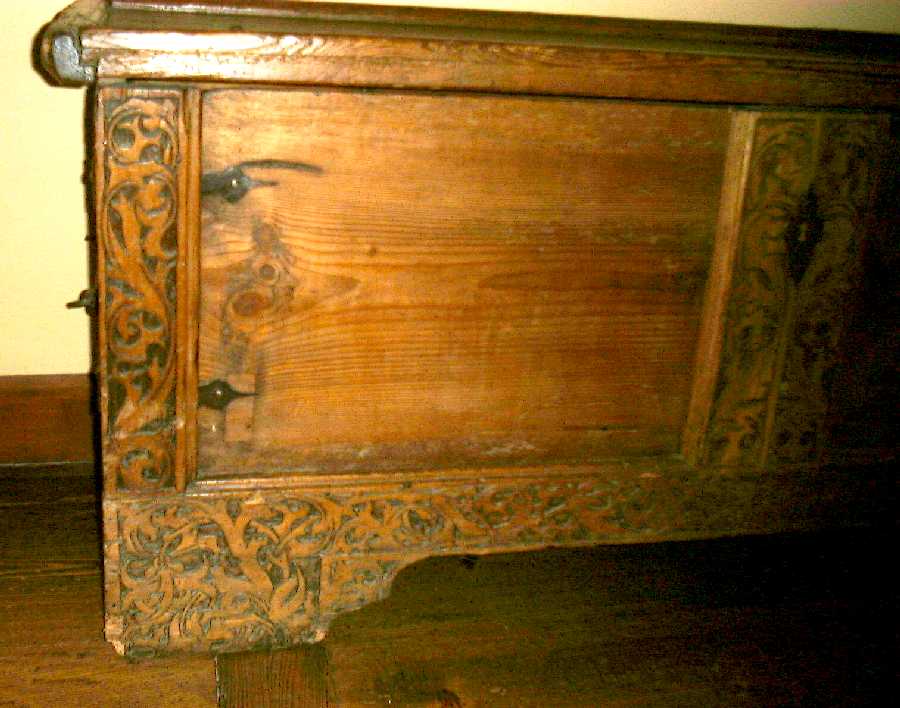
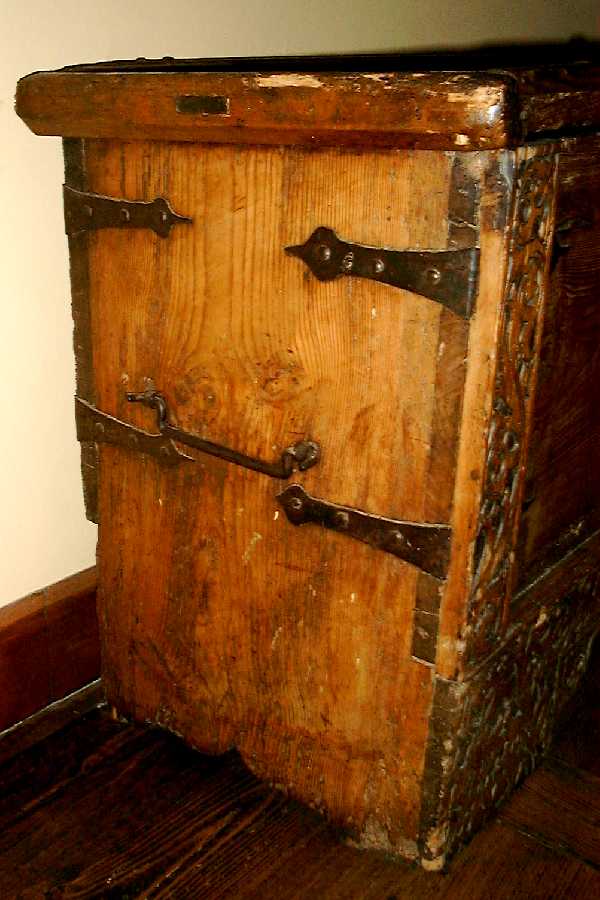
- A chest from South Tyrol, 14th-15th century
CLXX How to do Caskets or Chests.In executing caskets or chests, if you want to do them royally, gesso them, and follow all the methods which you follow in working on panel, for gilding and for painting and for stamping, embellishing and for varnishing, without obliging me to tell you about each step. (For more, see section 10
of Cennini's Libro dell'Arte.)
- Gable-roof chest from the 14th or 15th centuries
- Front panel of a chest, Dortmund, ca. 1400 (also here)
- Chest made in the area of Osnabruck c. 1400 (also here, here, here, and here)
- Chest made in the Dürener area c. 1400
- Front panel of a chest from the Lower Rhine at the beginning of the 15th century
- Museum of London 75.2, carved elmwood panel from the front of a chest with scenes from a story retold in the Pardoner's Tale in the Canterbury Tales, England (?), c. 1410
- V&A W.20-1913, the “Fares Chest,” British, early 15th century
- Museum of London L93, an iron chest thought to have been the City of London's original Common Chest for storage of important civic documents and teh City seals, early 15th century; caption, front, side, top, and back
- Chest in gilt wood, made in Italy in the early 15th century
- V&A 7613-1861, chest front with terracotta reliefs depicting scenes from the story of Adam and Eve, workshop of Lorenzo Ghiberti, c. 1415
- A chest from Klagenfurt, 15th century
- A chest from Bardejov, 15th century
- 15th century northern German chest
- 15th century Rhine farmer's chest (below)
- 15th century chest (also here and here) from Strasbourg
- Chest made in Westphalia in the 15th century
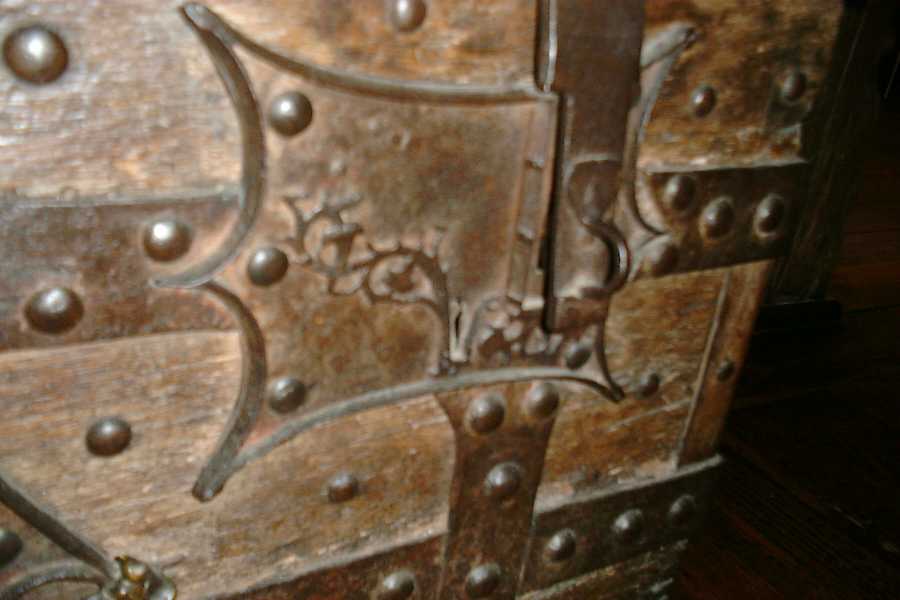
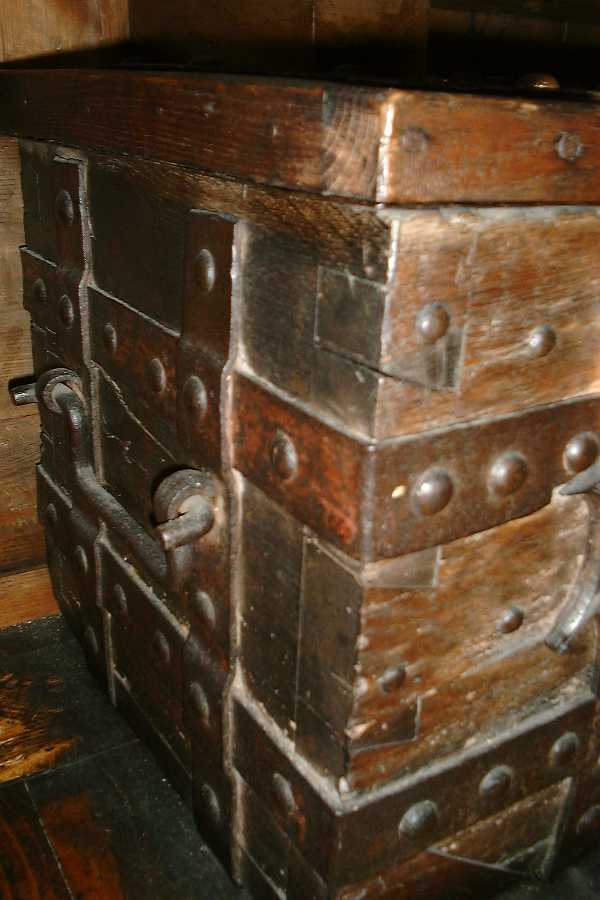
- Gable-roof chest (weapon chest), southern Germany, 15th century (also here and here)
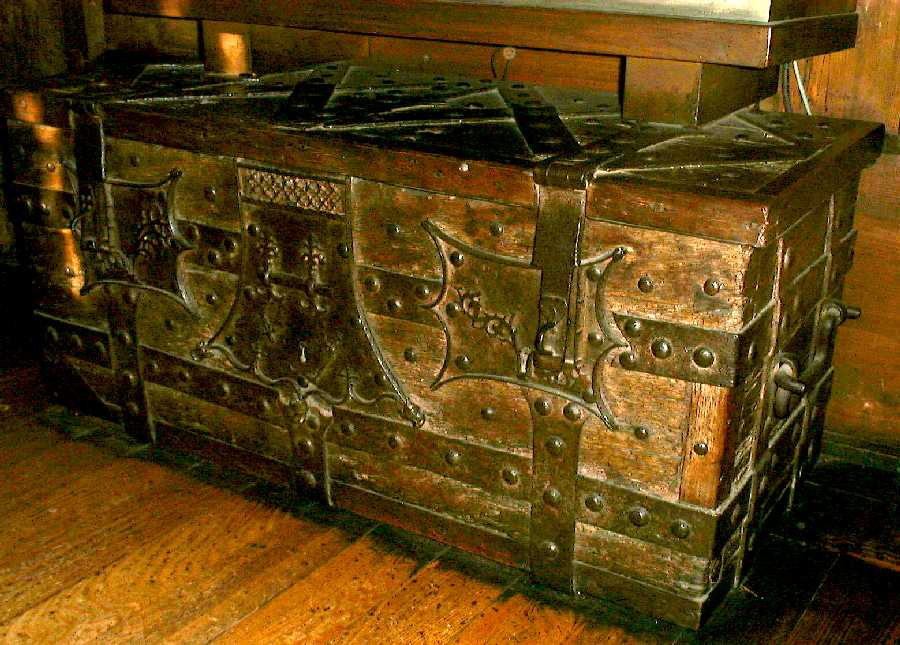
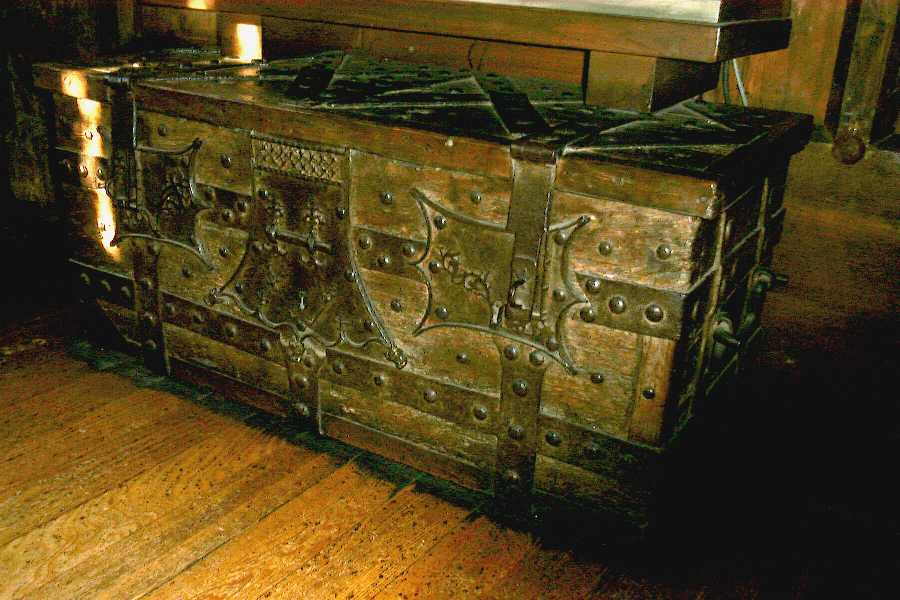
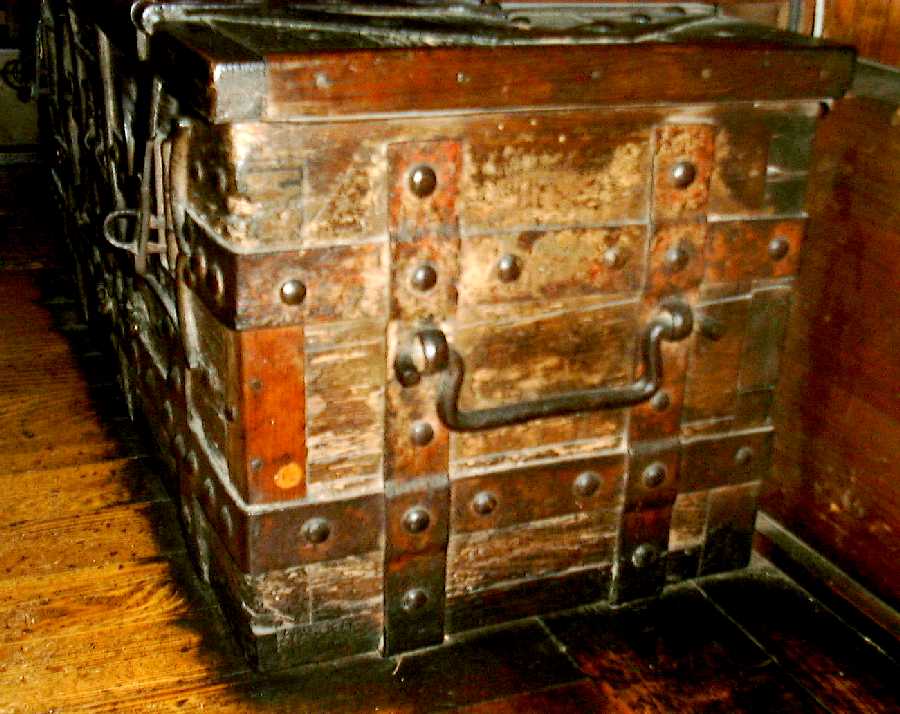
- Chest with iron fittings, Germany, 15th century
- Chest with tracery carving, Germany, 15th century?
- 15th century chest
- Painted board for a 15th century chest
- 15th century Italian chest
- Met 21.89.1, oak chest, British, 15th century
- Marh164, an English medieval armourers chest, c. 1450
- Met 41.190.277, oak chest/bench, French, 15th century
- Met 05.23.11, oak chest front, French, 15th century
- Met 05.22.4, oak chest front with iron lock, French, 15th century
- Met 52.53, oak chest with linenfold carving, French or South Netherlandish, 15th century
- A chest from South Tyrol, c. 1450-1500
- A chest from Kosice, c. 1450-1500
- Chest with the coat of arms of Mathis Eberler painted on the inside of the lid, 1466
- Front panel of a chest from 15th century upper Italy
- Chest from the Krefelder area, second half of the 15th century
- Chest in gilt wood made in Italy in the second half of the 15th century (also here)
- A chest carved with fleurs-de-lys and other decorations from Regensburg, c. 1475-1500
- Met 16.32.20, oak chest with iron mounts, French, late 15th century
- Marh074, an iron-bound standard, England, c. 1480-1500
- A chest, c. 1480-1500
- A chest with carved panels, made in Passau c. 1485-1495
- A chest from South Tyrol, 15th century
- A chest missing its bottom, from South Tyrol, c. 1490-1500
- Late 15th century Italian gilt chest
- Cleveland Museum of Art 1971.281, oak chest made in England in the late 15th or early 16th centuries
- Met 63.151, oak chest/cupboard, British, late 15th century
- A chest with tracery-carving from South Tyrol, 15th-16th century
- Chest made in Nuremburg, c. 1500
- Chest made in Westphalia, c. 1500
- Chest with tracery-carving made in Salzburg, c. 1500
- Small chest with intarsia, southern Tyrol, c. 1500
- V&A W.428-1922, carved oak chest with an iron lock, Great Britain, c. 1500
- Marh137, medieval English ironbound chest, East Anglia, c. 1500
- Marh143, late medieval oak and iron bound chest, Bruges, c. 1500
- Venetian chest c. 1500, another Venetian chest c. 1500, and another 16th century Venetian chest
- Met 17.190.393, oak chest, French, early 16th century: “Beneath late Gothic ogee arches, the French royal coat of arms of Charles VIII (1483–98) and Francis I (1515–47) is combined with the family crests of their queens, Anne of Brittany and Claude de France, and the crest of Louise of Savoy, the mother of Francis I.”
- A chest with ornamental leather covering (back), 1508
- Chest with carvings of the alliance of the coats of arms of Caspar von Mörsberg-Belfort and Helene von Sonnenburg-Waldburg
- Tiroler Volkskunstmuseum 5873, 16th century chest with pilasters and intarsia
- Christie’s Sale 5355, Lot 279, a large North European oak chest, 16th century
- Chest (Tyrolean?), 16th century (also here, here, here and here)
- Leather chest with decoration in brass nails made in Spain in the 16th century
- Marh134, ironbound oak church chest with three haspes, England, early 16th century
- Christie’s Sale 5746, Lot 1, a Henry VIII iron-bound oak chest, c. 1540
- V&A W.69-1916, carved oak chest, Great Britain, 1500-1550
- Marh0192, oak linenfold chest, Flemish (probably Bruges), c. 1530
- Chest of painted wood, made in Hessen in 1533; the head of Faith painted on one side
- A chest from Passau, 1540
- Chest made in Tyrol in 1546-1555
- Chest in painted wood, made in southern Germany in 1546-1555
- Chest with carved heraldic panels, made in Dortmund in 1546-1555
- Chest from the Palazzo Strozzi and a chest of the Strozzi family, made in Florence in the 16th century
- An iron-covered chest (interior), 16th century
- Marh131, Tudor boarded chest, England, c. 1550
- Marh 060, Tudor joined oak chest, England, c. 1550
- Marh114, Henry VIII oak panelled chest, England, c. 1550
- Marh228, Tudor inscribed oak chest, England, c. 1550
- 16th century Italian chest, and another 16th century Italian chest
- Getty 88.DA.7, pair of chests attributed to Antonio Maffei, c. 1550-1600
- Chest with veneer, intarsia, and pyrography made in Thurgau in the second half of the 16th century
- Marh0416, Elizabethan oak boarded chest, England, c. 1570
- Marh 113, oak box on stand, Dutch, c. 1575
- Bridal-chest with the figures of Faith and Justice, made for Christoph von Wiesenthau and Cordula von Aufseß in Oberfranken in 1584, intarsia (also here)
- Marh153, late Elizabethan joined oak Devonshire chest, c. 1590-1600
- Marh430, large late Elizabethan oak joined chest, England, c. 1600
- Met 64.101.1131, oak chest inlaid with various woods, British, c. 1600
- Marh0429, late Elizabethan oak board chest, England (possibly Cornwall), c. 1600
ILLUSTRATIONS & ARTWORK WITH CHESTS
- Abraham and Melchisedek (fol. 6),
Rebecca is led by Eleazar (fol. 12),
The psalter of St. Louis (BNF Fr. 10525), c. 1258-1270
- A dog guards his master's treasure, Bestiary of Love (BNF Fr. 1951, fol. 20), 13th-14th century
- A man with a chest and a man with sacks, the Smithfield Decretals (Brit. Lib. Royal 10 E IV, fol. 28v), last quarter of 13th century or 1st quarter of 14th century
- Scenes from the Life of Joachim: The Annunciation to St. Anne by Giotto, 1304-1306
- Scenes from the Life of St. Martin: The Dream of St. Martin by Simone Martini, 1312-1317
- Fols. 159r, 162v, and 171v of the Taymouth Hours (Brit. Lib. Yates Thompson 13), 2nd quarter of the 14th century
- Scenes of banking and usury, showing a man taking money from a chest, cuttings from a Latin prose treatise on the Seven Vices (British Library Additional 27695, fol. 8), c. 1330-1340
- Illustrations in the Romance of Alexander (Bodley 264), c. 1338-44; relevant illustrations include 83v, 124r, 165r, 169r, 169v, 169r, 184r, and 198v
- Greed, Roman de la Rose (Bibl. Sainte-Geneviève MS 1126, fol. 002v), c. 1350-1360
- Two men with a chest, the Bohun Psalter (British Library Egerton 3277, fol. 145v), c. 1356-1373
- Representation of vainglory; a couple display a chest filled with treasure, an interesting view of the interior of the chest, Omne Bonum (British Library Royal 6 E VII, fol. 516), c. 1360-1375
- St. Matthew, Le petite bible historiale de Charles V (BNF Fr. 5707, fol. 204), 1362-1363
- Guillaume de Machaut locks up the portrait (fol. 291) and then takes the portrait out of the chest (fol. 296v), Voir-dit (BNF Fr. 1584), c. 1372-1377
- Covetousness and Avarice, Roman de la Rose (British Library Yates Thompson 21, fol. 4), c. 1380
- Covetousness inspects her treasures, Roman de la Rose (Douce 332, fol. 2r), end of the 14th century
- Tobias heals Tobit (fol. 226) and the dream of Mordechai (fol. 256), Bible historiale (BNF Fr. 159), 14th-15th century
- Covetousness, Roman de la Rose (Douce 371, fol. 2r), c. 1400
- The siege of Samaria, Bible historiale (BNF Fr. 9, fol. 172), beginning of the 15th century
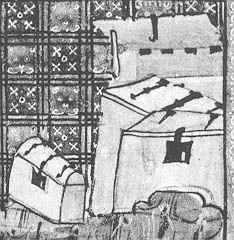
- Late medieval chest dated to the 15th century, "of a form commonly used in the 14th century"
- Busa gives alms, De mulieribus claris (BNF Fr. 598, fol. 103v), beginning of the 15th century
- Hannibal and the spies, Ab urbe condita (BNF Fr. 261, fol. 25), first quarter of the 15th century
- Solomon, Bible historiale (Brit. Lib. Royal 19 D III, fol. 300r), 1411
- The death of Roboam, De causibus (BNF Fr. 235, fol. 48v), first half of the 15th century
- Some of the workmen in the Mendel Housebook, including Karl Schreyner, um 1425;
Ott, 1443;
Peter Sreiner, 1444;
Paulus Weydmann, 1542
- Ruggieri d'Ajeroli is drugged (fol. 136), Spinelloccio comes out of the chest (fol. 234v), Pinuccio tricks the landlord (fol. 256v) The Decameron (BNF Fr. 239), second quarter of the 15th century
- Guillaume de Digulleville receives the staff (fol. 22v) and the Heart is chained to a chest (fol. 115), The pilgrimage of human life (BNF Fr. 376), second quarter of the 15th century
- Landolfo Rufolo escapes the shipwreck (fol. 44),
Ambrogiuolo surprises Ginevra (fol. 78), and
Ruggieri de'Figiovanni and the king (fol. 276v),
The Decameron (BNF It. 63), 1427
- Ghazan distributes the treasure, Djâmi' al-Tavârîh (BNF supp. pers. 1113, fol. 251), c. 1430
- Illustrations on fols. 51v, 84r, 176r, 304r, 350v of the Decameron (BNF Arsenal 5070), 1432
- A soul admonishes his executors who have hoarded his money in a chest, Le pèlerinage de l'âme (Douce 305, fol. 33r), 1435
- Avarice opens a chest of coins, Pilgrimage of the Life of Man (British Library MS Cotton Tiberius A. VII, fol. 40), c. 1430-1450
- Avarice, the Dunois Hours (Brit. Lib. Yates Thompson 3, fol. 174r), c. 1436-1450
- The heir raids his dying father’s coffers, The Hours of Catherine of Cleves (PML M.945, fol. 98v), c. 1440
- The battle between the Romans and the Latins (fol. 77v) and the battle of Ilipa (fol. 194), Ad urbe condita (BNF Fr. 33), mid-15th century
- Ajax and Ulysses with Agamemnon (fol. 128r) and Jocasta's embassy to Adrastus (fol. 158v), The Troy Book (Brit. Lib. Royal 18 D. II), c. 1455-1462
- Jean Froissart writing, Froissart's Chronicles (BNF Fr. 86, fol. 11), third quarter of the 15th century
- Boccaccio and Petrarch, De casibus (BNF Fr. 234, fol. 134v), third quarter of the 15th century
- Joseph puts gifts in a chest, book of hours (Canon. Liturg. 283, fol. 54r), 3rd quarter of the 15th century
- Moses in the water, Fleur des histoires (Bibl. Mazarine, ms. 1559, fol. 018v), c. 1450-1474
- Jean Mansel writes, Fleur des histoires (Bibl. Mazarine MS 1560, fol. 001), c. 1450-1474
- Plunder after the battle of Gaugamela, The history of Alexander the Great (BNF Fr. 20311), third quarter of the 15th century
- St. Jerome in his Study by Antonello da Messina, c. 1460
- Detail from The Birth of Mary, c. 1460-1465
- Avarice, Roman de la Rose (Douce 364, fol. 3r), c. 1460-1470
- The burning of Troy, The History of Troy (BNF Fr. 59, fol. 308), second half of the 15th century
- The assassination of Caesar, the so-called Chronicle of Baudouin d'Avesnes (BNF Fr. 279, fol. 136), second half of the 15th century
- Miracle of the fish of St. Honorat, Fleur des histoires (BNF Fr. 58, fol. 10), second half of the 15th century
- Caesar takes the Roman treasury, Speculum Historiale (BNF Fr. 50, fol. 185), 1463
- The Birth of Mary, 1470
- The dream of Arthur, Lancelot du Lac (BNF Fr. 111, fol. 294v), c. 1480
- Massacre of the inhabitants of Paris, The Vigils of Charles VII (BNF Fr. 5054, fol. 8v), 1484
- Dormition of the Virgin (BNF Fr. 56, fol. 90v) and the miracle of the fish of St. Honorat (BNF Fr. 58, fol. 10), Fleur des Histoires , 15th-16th century
- Battle of Gaugamela (fol. 23) and Darius III is a prisoner of Bessos (fol. 39v), The History of Alexander the Great (BNF Fr. 709, fol. 23), 15th-16th century
- Dido, Ovid's Heroides (BNF Fr. 873, fol. 42v), 15th-16th century
- The banquet by Albrecht Altdorfer
- A chest and key, The Tudor Pattern Book (Ashmole 1504, fol. 8v), c. 1520-1530
- Detail (showing dovetail joints) from The Death of Mary, 1522
- Annunciation, c. 1525-1535
- Noah's Sacrifice by Jacopo Bassano, c. 1574; a carpenter's chest at center (apparently with dovetail joints), and a more decoratively-painted chest at left
- Portrait of Sir Anthony Mildmay by Nicholas Hilliard, c. 1585; in addition to the (round-topped!) chest, this picture is neat because it's showing off several items in an Elizabethan gentleman's pavilion; a covered table, an upholstered chair, a cushion, and his pet dog.
|