|
See also Medieval Lanterns. (A page on 18th century lanterns appears elsewhere on this site.
- The arrest of Christ, The Fécamp Psalter (KB 76 F 13, fol. 21v), c. 1180
- Ceramic lantern, late 12th-early 13th century, in Raqqa, Syria
- The flight of the Midianites, the Maciejowski Bible (PML M.638, fol. 13r), c. 1250
- Betrayal of Christ, a psalter (PML M.113, fol. 36v), second half of the 13th century
- Betrayal of Christ, a psalter-hours (PML M.183, fol. 213r), c. 1280s
- The arrest of Christ, The Picture-Book of Madame Marie (BNF Latin 16251, fol. 33v), c. 1285-1290
- Green-glazed ceramic lantern from Saintonge
- The man at the far left in The Betrayal of Christ, The Windmill Psalter (PML M.102, fol. 52v), late 13th century; the lantern resembles some of the ceramic medieval lanterns listed above
- Christ Taken Prisoner by Duccio di Buoninsegna, 1308-1311
- Lantern, 14th century
- The arrest of Christ, Bible Historiale (BNF Fr. 152, fol. 437v), 14th century
- Man with lantern, psalter (Douce 6, fol. 145r), c. 1320-1330
- Border decoration, The Life of St. Louis (BNF Fr. 5716, fol. 345), c. 1330-1340
- St. Julien the Hospitaller, The Golden Legend (BNF Fr. 241, fol. 55v), 1348
- An ape holding a lantern, Voeux du paon (PML G.24, fol. 30v), c. 1350
- Copper-alloy lantern found in Smithfield, mid-14th century
- The treason of Judas, the Petites heures de Jean de Berry (BNF Latin 18014, fol. 76), c. 1375
- Instruments of the Passion, a book of hours (PML M.90, fol. 50r), c. 1375; interesting detail on the panes of the lantern
- Archbishop Absalon’s lantern, Denmark, 14th century
- Instruments of the Passion (fol. 77v) and St. Gudula (fol. 125r), a book of hours (KB KA 36), c. 1375-1400
- Betrayal and arrest of Christ, a book of hours (PML M.90, fol. 46v), c. 1370-1380
- The arrest of Christ, the Très Belles Heures de Notre Dame de Jean de Berry (BNF Nouvelle acquisition latine 3093, fol. 181r), c. 1380
Lanterna haþ þat name for light is yclosed þer Inne, and is y-made of glas, or of horne, ouþer of som other clere þing, and light is y-closed er Inne for þat þe wynde schulde nou3t blowe out þe light; and he ... is ofte y-bore aboute wiþ light þer Inne. John Trevisa's translation
of De Proprietatibus Rerum
(British Library MS Add. 27944), c. 1398 - Hermit-grotesque reading by lantern-light, book of hours (Douce 62, fol. 105v), c. 1400
- St. Christopher, a book of hours (Rawl. liturg. e. 12, fol. 163v), beginning of the 15th century
- Argia searches for Polynices' body, De mulieribus claris (BNF Fr. 598, fol. 41v), beginning of the 15th century
- Lantern, 15th century
- Lantern, 15th century Sweden
- St. John the Baptist (fol. 12v), St. Christopher (fol. 27v), the arrest of Christ (fol. 35v), a book of hours (Laud Lat. 15), first quarter of the 15th century
- Various 15th century lanterns on page 7 of Dragon #1; more 15th century lanterns on pp. 6-21 of Dragon #9
- Marginal illustrations: a crouching man holds a lantern (fol. 23r) and a kneeling monk holds a lantern (fol. 170r), The Hours of Charlotte of Savoy (PML M.1004), c. 1420-1425
- An angel with a torch and a lantern, a book of hours (Douce d. 19, fol. 54r), c. 1420-1430
- Ffritz Hornrichter works with a plate of horn for a lantern, Mendel Hausbuch (Amb. 317.2, fol. 15v), c. 1425
- Parable of the lost coin (ÖNB 485, fol. 32v), c. 1425-1435
- The arrest of Christ, The pilgrimage of human life (BNF Fr. 376, fol. 214), second quarter of the 15th century
- St. John the Baptist, Bible Historiale (KB 78 D 38 II, fol. 148v), c. 1430
- St. Julian the Hospitaller and his wife, The Hours of Eleanor Worcester (Brit. Lib. Harley 1251, fol. 43), c. 1430
- The story of Madonna Francesca in the Decameron (BNF Arsenal 5070, fol. 321v), 1432
- St. Christopher, a book of hours (MMW 10 F 11, fol. 9r), c. 1440
- Arrest of Christ, the Hours of Marie de Rieux (PML M.190, fol. 42r), c. 1440-1450
- Hand-lantern from Sweden, 15th century
- St. John the Baptist, a prayerbook (KB 130 E 17, fol. 5v), c. 1450
- Detail from Nativity, c. 1450-1490
- Speculum humanae salvationis (BNF Fr. 188), mid-15th century:
the arrest of Christ (fol. 22v),
the Virgin Mary battles Satan (fol. 34v),
the parable of the lost drachmas (fol. 40),
the arrest of Christ (fol. 48), and
the Virgin Mary and the emblems of the life of Christ (fol. 51)
- Detail from a fresco of the Arrest of Christ in the Sanctuary Notre-Dame des Fontaines
- St. Christopher (fol. 260v) and St. Julian the Hospitaller and his wife (fol. 273v), The Hours of Philip of Burgundy (KB 76 F 2), c. 1450-1460
- Nativity, a book of hours (PML M.104, fol. 62r), c. 1450-1460
- Teaching scene, De proprietatibus rerum (BNF Fr. 22533, fol. 100v), third quarter of the 15th century
- The arrest of Christ, Fleur des histoires (BNF Fr. 56, fol. 46), second half of the 15th century
- St. Christopher, The Hours of Simon de Varie< (KB 74 G 37, fol. 74v), c. 1455
- Instruments of the Passon, a book of hours (KB 135 E 40, fol. 111r), c. 1455-1460
- St. Christopher, The Hours of Catherine of Aragon (KB 76 F 7, fol. 23v), c. 1460
- Malchus reaches for the lantern, Chronique universelle (PML M.214, fol. 2v), c. 1460
- Lantern (detail), c. 1460-1480
- Detail from St. Christopher, c. 1460-1480
- The dream of St. Gregory of Nazianzus (fol. 164) and
St. Jerome teaching (fol. 216v), Speculum historiale (BNF Fr. 51), 1463
- Malchus holding a lantern and staff, book of hours (PML M.1003, fol. 20r), c. 1465
- Bernard of Clairvaux, victory over the Devil, the Hours of Infante Don Alfonso of Castile (PML M.854, fol. 199v), c. 1465-1480
- Tristan is surprised in Isolde's room, Tristan de Léonois (BNF Fr. 102, fol. 69v), c. 1470
- St. Christopher, book of hours (Liturg. 41, fol. 200v), c. 1470-1480
- Book of hours of Étienne Chevalier by Jean Fouquet (Museé Conde 71, fol. 23r), 15th century
- Alexander looks at the eclipse, The History of Alexander the Great (BNF Fr. 257, fol. 58v), fourth quarter of the 15th century
- St. Christopher, a book of hours (PML M.198, fol. 105r), c. 1480
- Triptych of the Family Moreel by Hans Memling, 1484 (center panel)
- St. Christopher, The Golden Legend (BNF Fr 245, fol. 5v), c. 1480-1490
- St. Christopher, a book of hours (PML M.231, fol. 199v), c. 1480-1495
- Retable of the Passion by Master Arnt, c. 1483
- Christ teaching, a book of hours (PML M.894, fol. 230v), c. 1485
- Malchus at the arrest of Christ (fol. 86r) and a fox holding a lantern (fol. 124r), a book of hours (PML M.26), c. 1485-1490
- Malchus at the arrest of Christ, a book of hours (PML M.231, fol. 122v), c. 1485-1490
- Detail of Joseph holding a lantern that is open to show a twisted candle with multiple wicks in a Nativity, c. 1485-1495
- Detail from The Nativity, c. 1485-1495
- Nativity, a book of hours (PML M.291, fol. 32r), c. 1490
- Detail from Nativity by Friedrich Herlin, 1488
- St. Christopher, a book of hours (MMW 10 F 1, fol. 209r), c. 1490
- The Arrest of Christ by the Master of Haarlem, c. 1490
- Nativity, a book of hours (PML M.380, fol. 52v), c. 1490
- Nativity, a book of hours (PML M.1053, fol. 61v), c. 1490-1500
- Detail (and another detail) from Christ in front of Caiphas from the Altarpiece of the Birth of Christ, Bardejov, c. 1490-1500
- Detail from The Nativity in the Kefermarkt Altar, c. 1490-1500
- The kiss of Judas (Bibl. Mazarine MS 0412, f. 150), c. 1491-1493
- St. Christopher, a book of hours (KB 135 G 19, fol. 139r), c. 1495
- Nativity, c. 1495-1505
- Animal carrying a halberd and lantern, book of hours (Buchanan e. 8, fol. 21v), late 15th/early 16th century
- Detail from The Arrest of Christ by Reuland Frueauf the Younger, 1498
- Medieval lanterns at the Swedish Historical Museum: SHM 3884, SHM 5975, SHM 7328
- The arrival of Aristonikos of Methyma at Chios, The History of Alexander the Great (BNF Fr. 709, fol. 9), 15th-16th century
- Right wing of the Triptych of the Garden of Earthly Delights by Hieronymus Bosch, c. 1500
- A lantern-seller, Les Cris de Paris, c. 1500
- Christ confounding soldiers (fol. 13r), Mass of St. Gregory (fol. 168r), and St. Christopher (fol. 178r), Hours of Henry VIII (PML H.8), c. 1500
- St. Christopher, a prayer-book (Douce 264, fol. 15v), beginning of the 16th century
- Detail from St. Christopher by Simon von Taisten, c. 1500-1510
- The Bellows-Repairer by Hieronymus Bosch
- Two dwarf characters from the mountains under a tree, 15th century
- Nativity (fol. 51v) and the arrest of Christ (fol. 227v), The Hours of Anne of Brittany (BNF Fr. 9474), c. 1503-1508
- St. Joseph in The Birth of Christ, 1506
A cheape lanterne, wherein a burning candle may be carried, in any stormie or windie weather, without any horne, glasse, paper, or other defensatiue, before it. Make a foure-square box, of 6 or 7 inches euerie waie, and 17 or 18 inches in length, with a socket in the bottome thereof, close the sides will either with doue tails or cement, so as they take no aire, leaue in the middest of one of the sides a slit or open dore, to put in the candle, ich from the bottome to the toppe thereof whmay contain 6 or 7 inches in length, and twoe and a halfe in bredth, though it stand open and naked to the ayre without any defense, yet the winde will haue no power to extinguish the same. The reason seemeth to be because the box is already full of ayre, whereby there is no roome or place to conteine any more, neither can the ayre finde any thorough passage, by reason of the closenesse thereof. The socket would be made to screw in and out at the bottom and then you may put in your candle before you fasten the socket. This is borrowed of one of the rarest Mathematicians of our age. Hugh Platt, The Jewell House of Art and Nature - The Betrayal of Christ by Albrecht Dürer, 1508
- St. Christopher by Albrecht Dürer, 1511
- The adoration of the shepherds, 16th century Germany
- Malchus at the arrest of Christ, a book of hours (PML M.290, fol. 10v), c. 1520; interesting detail on the panes of the lantern
- A lantern, The Tudor Pattern Book (Ashmole 1504, fol. 12v), c. 1520-1530
- Hanns Dürr, a lantern-maker, Mendel Hausbuch (Amb. 317.2, fol. 155v), 1536
- A lantern on the Mary Rose, 1545, also here
- Satire of the merchant's greed by Pieter Brueghel the Elder, c. 1550-1560
- Elck or Everyman by Pieter Bruegel the Elder, 1558
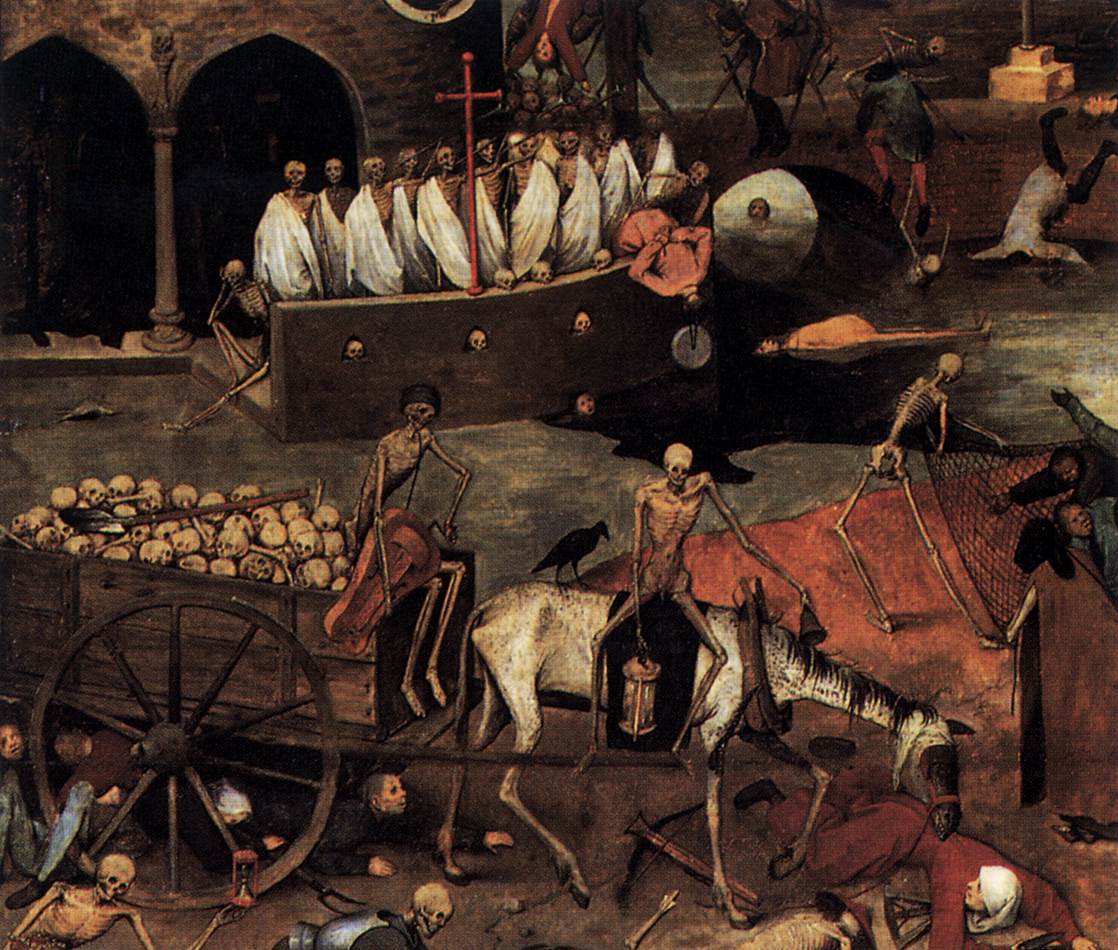
- Detail and another detail from The Triumph of Death by Pieter Bruegel the Elder, c. 1562
- The Gloomy Day by Pieter Bruegel the Elder, 1565 (detail)
- The lanternmaker, Das Ständebuch, 1568
- Lantern in carved, gilt, and painted wood, probably from the portego of a Venetian palace, c. 1570; note similarity to the ceiling fixture in a ball in Venice in 1580
- Lantern (fol. 38r) and a pitchfork-like weapon with a lantern attached (fol. 39r), Machines et utensils de guerre (Douce b. 2), 1582
- The Betrayal of Christ, 1596-1597
|